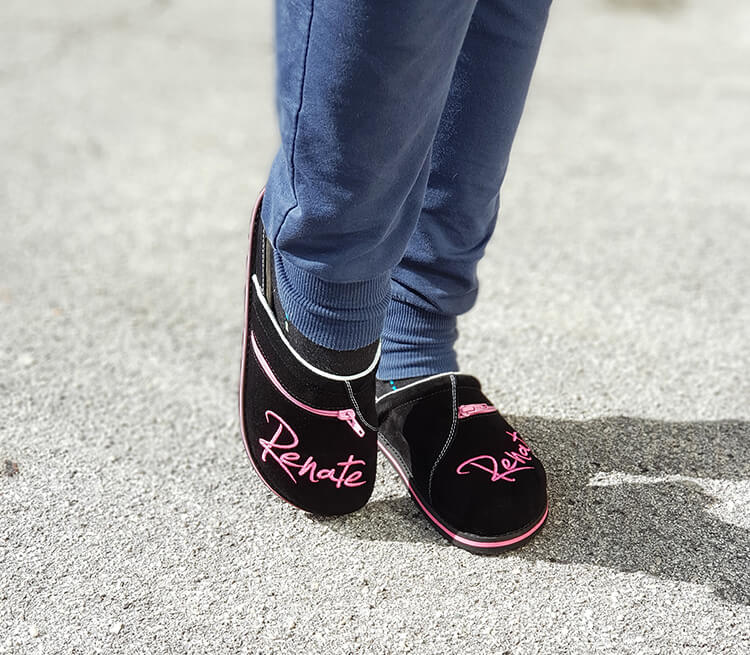

Article: Why not all mules are created equal: Blake-stitched or lasted? #2
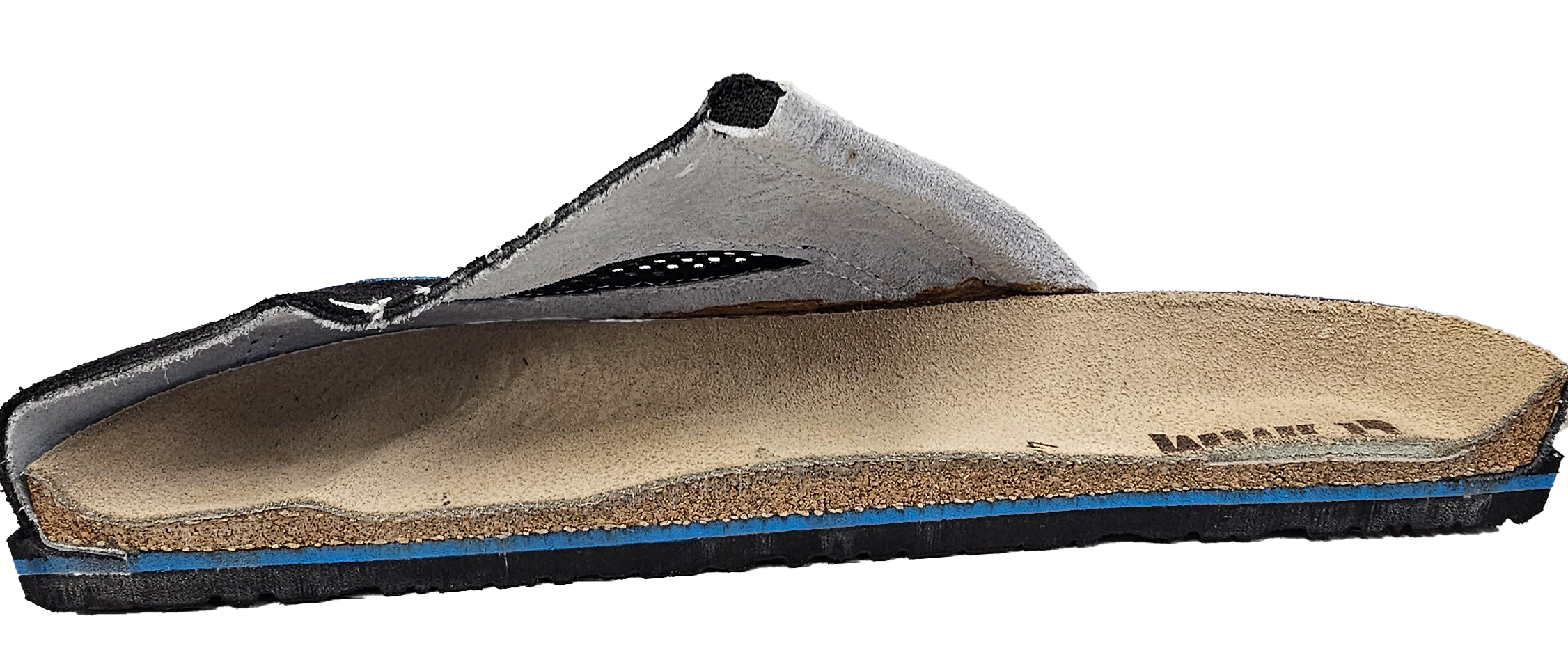
Why not all mules are created equal: Blake-stitched or lasted? #2
Why not all mules are created equal: The difference between flex-sewn and lasted construction
When we buy mules, we usually first look at shape, color, material, and comfort. Much less often do we think about something that is crucial for a shoe's quality: the method of construction.
However, this construction method strongly influences how a mule behaves when walking, how well it retains its shape, how securely it fits on the foot, and how long it maintains its properties.
There are various construction methods for mules. One is the so-called flex-sewn construction, and another is the lasted construction, which is used for LOMM mules.
Even if both designs can be comfortable, the difference is clearly noticeable.
What is flex-sewn construction?
In flex-sewn construction, the upper material is usually sewn directly to the sole or the sole edge. This construction is commonly found in slippers, soft mules, and shoes where the focus is primarily on softness and flexibility.
The result is a shoe that is very soft, light, and flexible. The foot feels loose and free, and the shoe quickly adapts to the foot's shape.
This construction method has its advantages, especially for use at home or for less demanding activities. The shoe can be pleasant, soft, and comfortable from the first wear.
However, flex-sewn construction also has its limitations. Since the upper material is not shaped over a last in the same way as with lasted construction, the construction is usually less stable. The shoe is more like a slipper and can lose its shape more quickly over time, stretch out more, or offer less support to the foot during prolonged walking.
What is lasted construction?
The lasted construction is a traditional and more skilled manufacturing process. In this method, the upper material of the mule is pulled over a last, stretched, and precisely connected to the lower part of the shoe.
This means that the mule does not randomly get its shape, but is clearly defined during manufacturing. As a result, it encloses the foot better, retains its shape longer, and offers more stability when walking.
For LOMM mules, lasted construction is not just a technical detail. It is an important component of comfort, quality, and a secure feel in everyday life.
The main difference: Slipper feel or the feel of real shoes
The easiest way to explain the difference is as follows:
Flex-sewn construction gives the feel of a soft slipper.
LOMM's lasted construction gives the feel of a stable, anatomically shaped mule.
With flex-sewn construction, the focus is primarily on softness and flexibility. With lasted construction, on the other hand, the focus is on the balance between comfort, shape, stability, and long-term quality.
LOMM mules are therefore also suitable for prolonged wear, work, walking on various surfaces, and daily use — anywhere where softness alone is not enough. The foot also needs support, stability, and a secure feeling with every step.
Comparison of construction methods
| Feature | Flex-sewn construction | Lasted construction by LOMM |
|---|---|---|
| Manufacturing method | Upper material is sewn directly to the sole or sole edge | Upper material is shaped over a last |
| Wearing comfort | Soft, slipper-like, very flexible | Comfortable, stable, and shape-retaining |
| Foot stability | Lower | Higher |
| Product shape | Softer, can lose shape faster | Retains shape better |
| Support when walking | Basic support | Better support |
| Appearance | More slipper-like | Shoemaker-like, higher quality, premium |
| Long-term use | Can stretch or deform more quickly | Retains construction better |
| Suitable use | Home and relaxed use | Everyday, work, and prolonged wear |
Why does LOMM use lasted construction?
At LOMM, we don't want to make a mule that is simply soft. Our goal is a mule that is comfortable, stable, high-quality, and durable.
That's why we use lasted construction, because it allows for a better shape of the upper material, a better fit on the foot, and more stability when walking.
This is especially important for anatomical mules, where the shoe should support the foot — and not just follow its shape. A mule should be comfortable, but at the same time stable enough to give the foot a secure feeling.
Comfort is not just softness
Comfort is often confused with softness. But in high-quality footwear, comfort means much more.
Good comfort means:
- that the foot sits well in the mule,
- that the shoe does not lose its shape quickly,
- that the stride remains stable,
- that the foot does not slip too much in the shoe,
- that wearing it still feels comfortable even after several hours.
That's precisely why the construction of a mule is so important. Soft shoes can feel very comfortable at first, but for prolonged use, the foot often needs more support.
LOMM mules combine the pleasant feel of natural materials with a more stable, shoemaker-crafted construction.
Craftsmanship you feel with every step
Lasted construction requires more knowledge, more precision, and more time. Each upper material must be correctly shaped, stretched, and secured for the mule to achieve its proper form.
It's not the fastest way to manufacture — but it's a way that allows for higher quality.
At LOMM, we are convinced: you can feel the difference in manufacturing with every step — in stability, comfort, shape, and durability.
Conclusion
Not all mules are created equal.
Flex-sewn construction is particularly suitable for soft, slipper-like, and very flexible shoes. Lasted construction, on the other hand, allows for a more stable, shape-retaining, and higher-quality mule that better supports the foot and retains its shape longer.
That's why LOMM mules are made with lasted construction.
Because comfort is not just a feeling of softness.
Comfort also means stability, support, and lasting quality.